
Neuschwanstein: Bavaria’s Dreamlike Fairytale Castle
“Oh, it is necessary to create such paradises, such poetic refuges where one can forget, for a little while, the dreadful times in which we live.”
Ludwig II of Bavaria
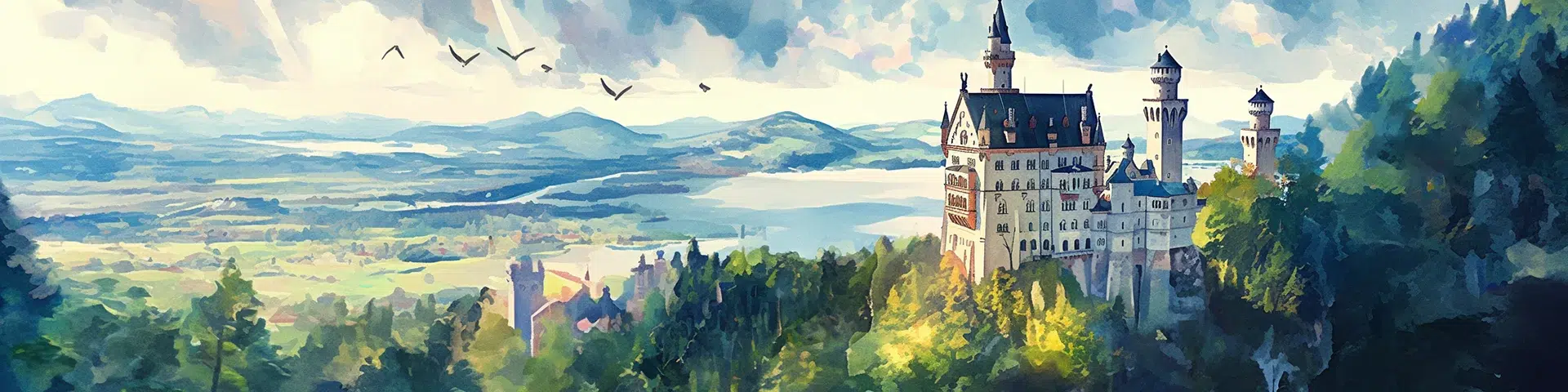


The Story Behind Neuschwanstein Castle
Perched high on a Bavarian hill, Neuschwanstein Castle looks like it was born straight out of a fairytale. Commissioned by King Ludwig II of Bavaria, the construction began in 1869 and continued until 1884.
Often called the “Mad King”, Ludwig II was a visionary fascinated by medieval legends like Parsifal and Lohengrin. His dream was to create a refuge where fantasy and reality could meet — a world apart from politics and noise.
Sadly, the king never saw his dream completed. Yet today, Neuschwanstein welcomes over a million visitors every year, standing as Germany’s most visited monument and one of Europe’s most iconic castles.

Visiting Neuschwanstein and Hohenschwangau Castles
Just a short walk from the main parking area lies Hohenschwangau Castle, another gem worth exploring. While it may not be as striking as Neuschwanstein, its visit offers fascinating insights into Bavarian royal life.
If you’re traveling on a budget, the exterior view alone is well worth the stop — the inside of Neuschwanstein, though elegant, isn’t the main highlight. The real magic happens outside, especially from the famous Marienbrücke Bridge, where you’ll capture the most Instagram-worthy views of the castle and valley. The bridge is free and open year-round, offering a perspective you won’t forget.
Each season brings its own charm: snow-covered winters, golden autumn forests, or lush summer greenery — Neuschwanstein always looks like a dream. The paved path leading to the castle is easy, though slightly uphill. Horse-drawn carriages are available, but walking allows you to fully soak in the fairytale scenery that surrounds this Bavarian icon.
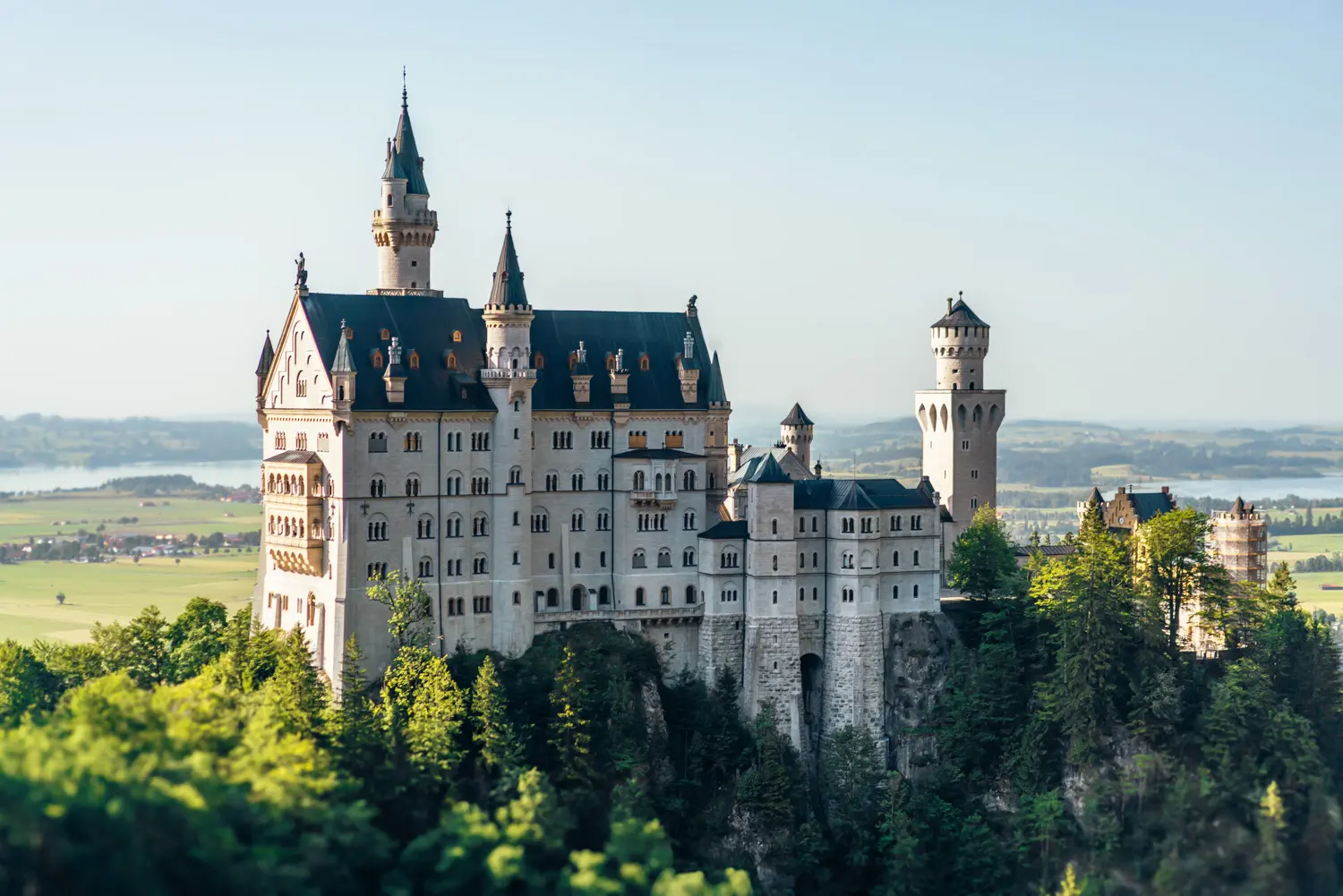
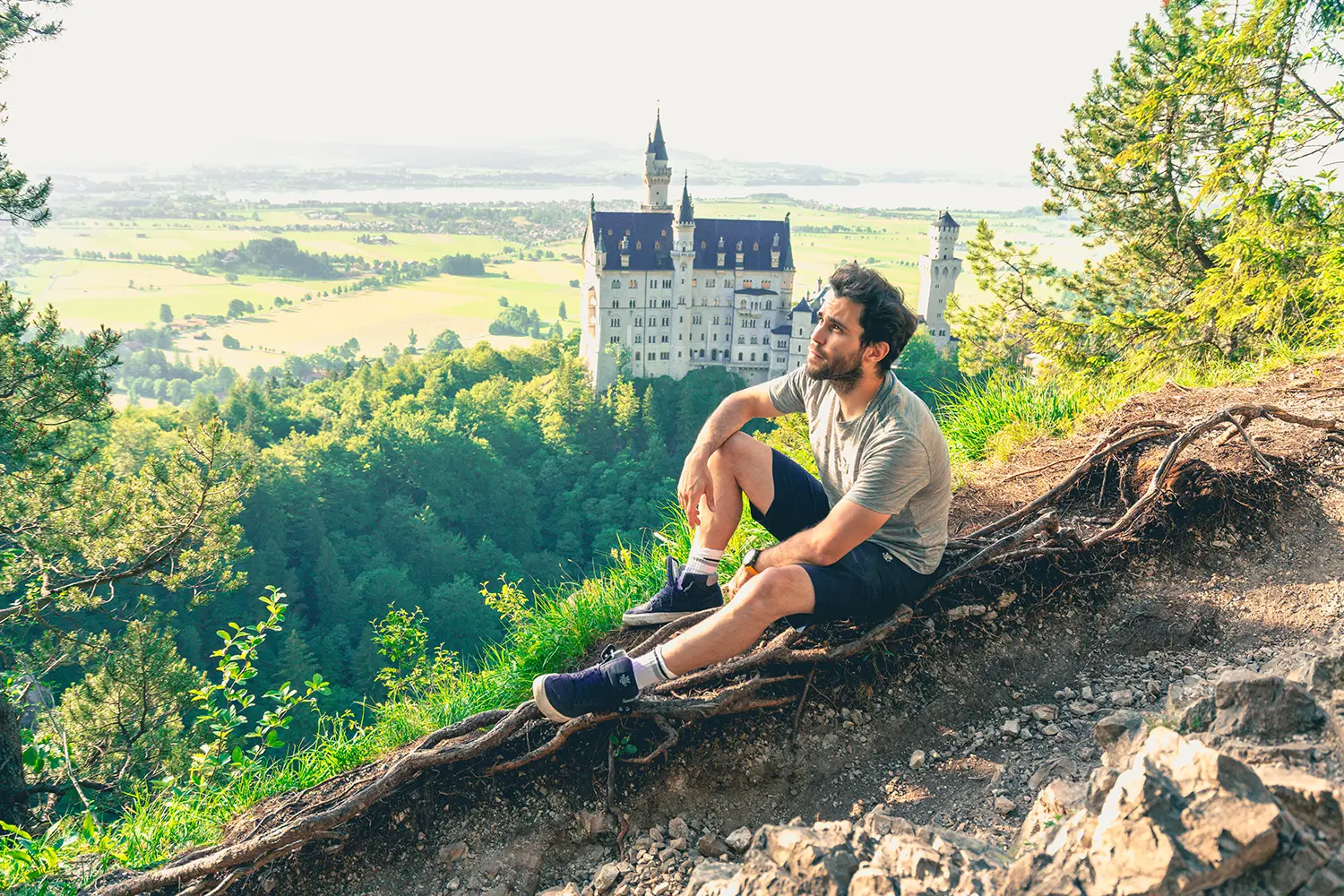
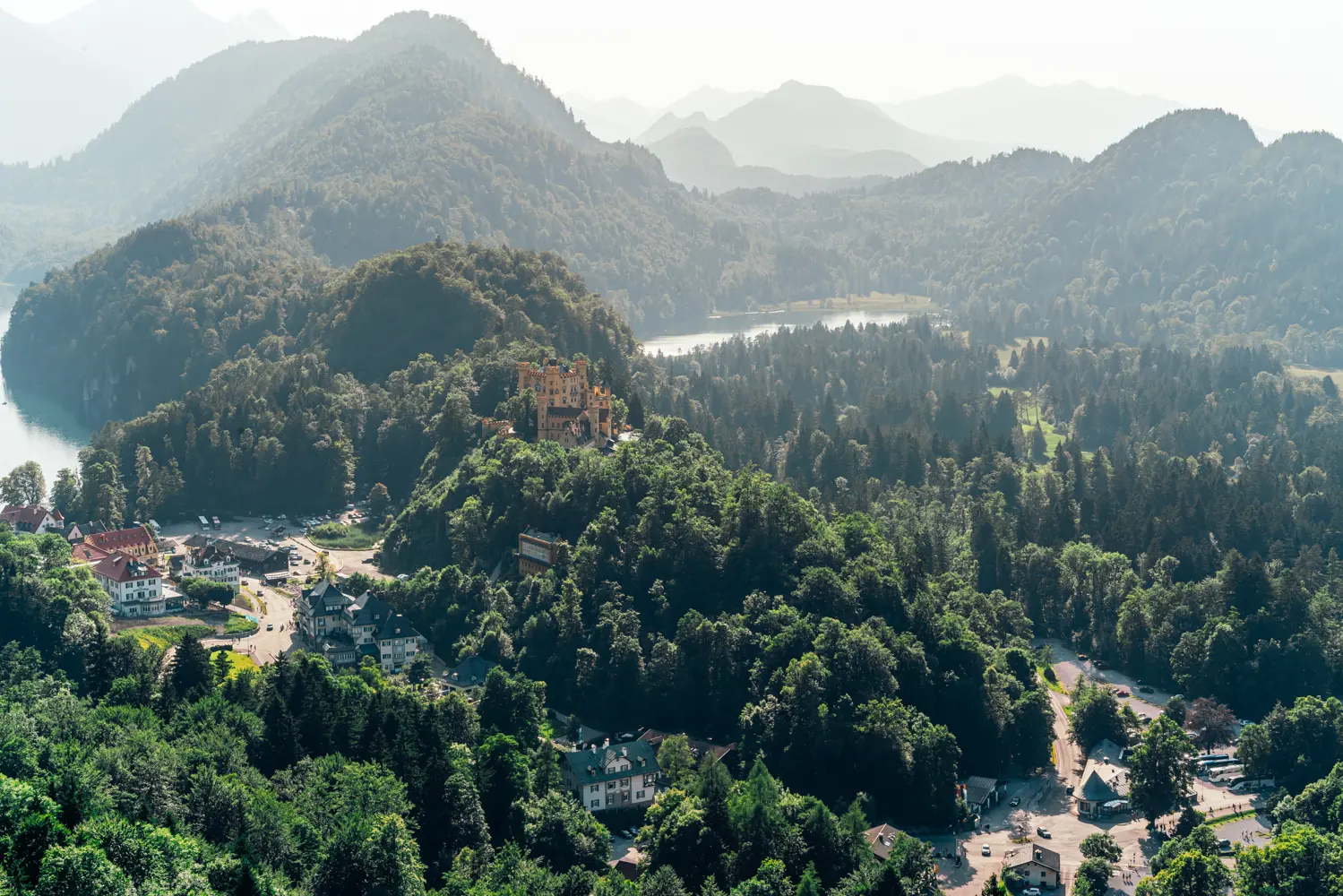
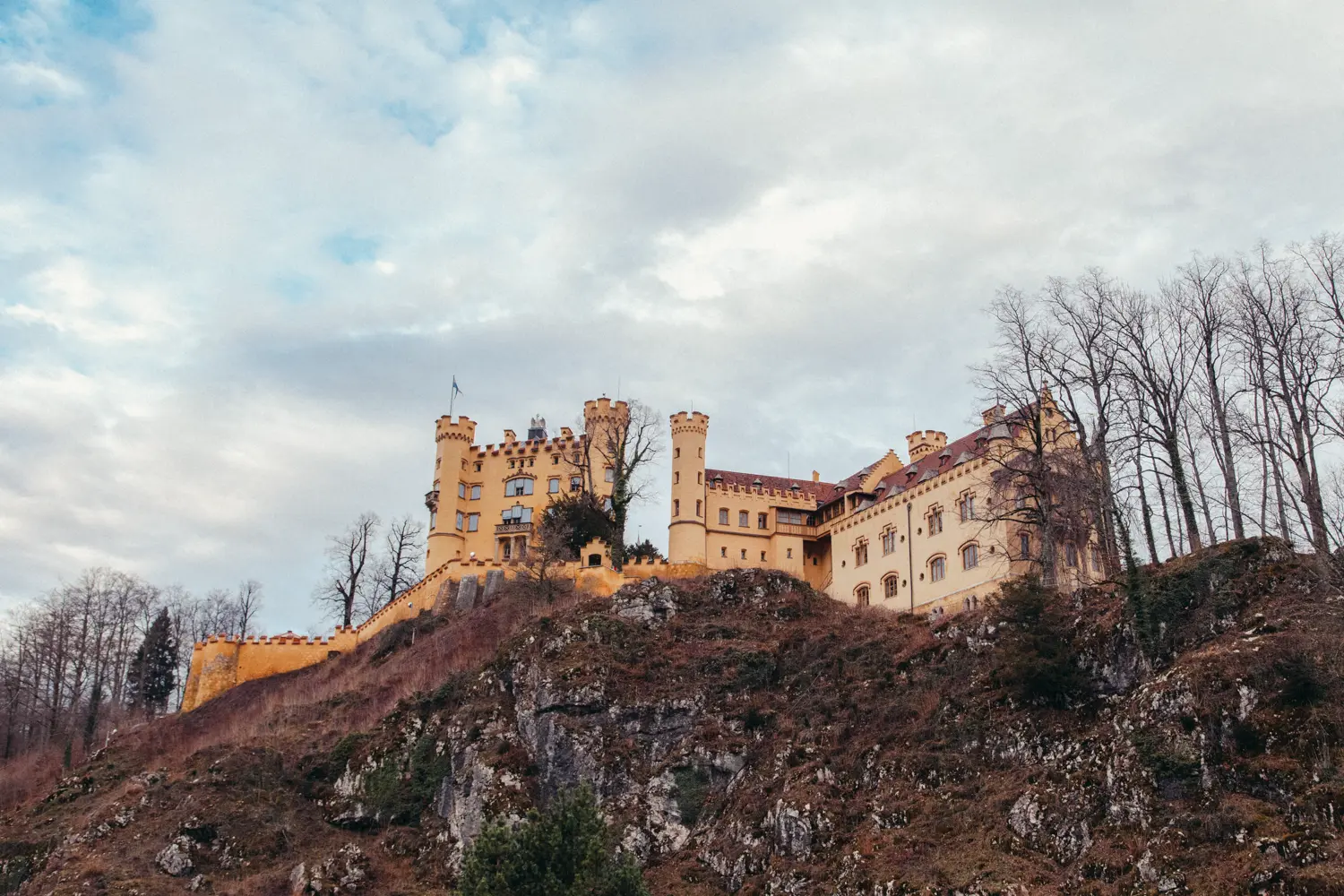
he outside of Neuschwanstein Castle is far more impressive than its interior. There’s nothing extraordinary inside, but if you still wish to enter, be ready to pay the entrance fee.
Each season offers a perfect excuse to visit — snowy winters and autumn landscapes covered in golden leaves make the castle look straight out of a fairytale. The paved path leading up to it is easy to follow, though it’s a steady climb. Horse-drawn carriages can take you to the top, but I’d strongly recommend walking instead — the views are worth every step.
Don’t miss the Marienbrücke, the iconic bridge overlooking the castle. It’s from here that the most Instagram-famous photos are taken — and surprisingly, the access is completely free! If you’re afraid of heights, though, don’t look down.
In short, if your goal is simply to admire both castles from the outside, you won’t need to spend a single penny.
Ticket Prices for the Visit
| Ticket Type | Price |
|---|---|
| Adults | €18 |
| Reduced (seniors, students, etc.) | €17 |
| Children under 18 | Free |
Parking Fees
| Vehicle Type | Price for 6 hours | Price for 24 hours |
|---|---|---|
| Cars | €7 | €12 |
| Camper vans / RVs | — | €13 |
| Motorcycles | — | €3 |
| Buses | — | €30 |
Transport to the Castle
| Mode of Transport | Uphill Fare | Downhill Fare |
|---|---|---|
| Shuttle | €2.60 | €1.80 |
How to Visit Neuschwanstein Castle
The easiest way to visit Neuschwanstein Castle is by car. The drive through the Bavarian countryside is scenic and straightforward.
If you prefer public transport, take a train to Füssen, a charming town located about 3 km from the castle. From the Füssen train station, hop on bus number 73 or 78 towards Hohenschwangau Neuschwanstein. This route is reliable, easy to follow, and perfect for travelers exploring without a car.
Where to Stay Near Neuschwanstein Castle
If you’re planning to spend the night nearby, Hohenschwangau and Füssen are your best options.
Hohenschwangau is a small, charming village located just a short walk from both castles — perfect if you want to wake up with a view of the Bavarian hills.
Füssen, on the other hand, offers a wider range of hotels, guesthouses, and restaurants. It’s a lovely historic town that deserves a visit on its own, especially if you have some extra time to explore after your castle tour.
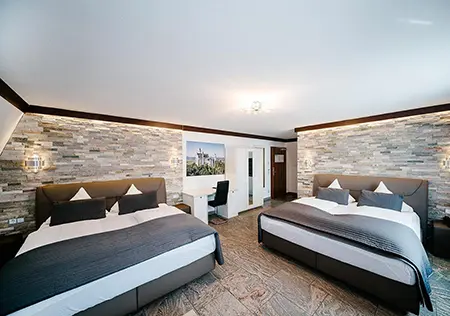
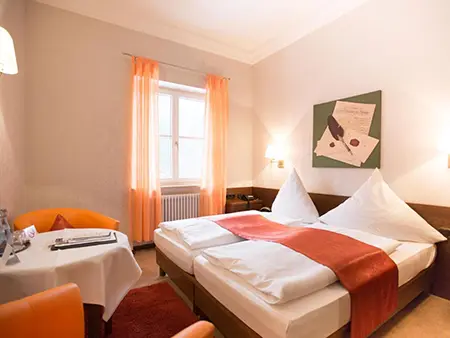
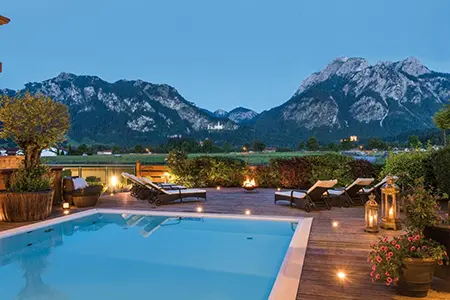
Where to stay near Neuschwanstein : my recommended hotels
Restaurants Near Neuschwanstein
After a full day exploring Neuschwanstein Castle, you can unwind in one of the nearby restaurants. Whether you’re craving traditional Bavarian dishes or more modern cuisine, the area offers plenty of options to suit every taste.
Enjoy local specialties served in charming Alpine settings — the perfect way to end your visit to this fairytale region of Bavaria.

Gasthof Zum Schwanen
Homemade schnitzel, sausages and spätzle served in a rustic dining room near the castles.

DejaVu — Restaurant Café Bar
Contemporary dining, veggie options and a warm atmosphere — ideal for dinner after Marienbrücke.

RIWA Bar & Restaurant
Refined European dishes, signature cocktails and stunning views over Lake Forggensee — perfect at sunset.
When to Visit Neuschwanstein Castle
To help you choose the best time to visit Neuschwanstein Castle, you can check the average temperatures month by month and see at a glance the ideal weather conditions for planning your trip.
Whether you love snow-covered landscapes or sunny summer walks, this tool lets you visualize the perfect moments to make the most of your visit.
You’ll also find seasonal travel tips by clicking on each month — from what to do nearby to the best ways to enjoy the castle at different times of the year.
In short, an easy and inspiring way to decide when to experience the magic of Neuschwanstein!